

OSD Deutsch
İnceleme ekleme Takip etGenel bakış
-
Kuruluş Tarihi 01-07-1996
-
Sektörler Nakliyat Sigortaları
-
Yayınlanan İlanlar 0
-
Görüntülendi 1
İşveren Hakkında
Where Will B1 Certificate Be One Year From In The Near Future?
Understanding the B1 Certificate: A Gateway to English Proficiency
In today’s globalized world, the capability to communicate in English has actually become significantly crucial. One of the turning points in accomplishing English proficiency is obtaining a B1 Certificate, which represents an intermediate understanding of the language. This article provides a detailed overview of the B1 Certificate, its significance, the examination process, and responses to often asked questions.
What is the B1 Certificate?
The B1 Certificate becomes part of the Common European Framework of Reference for Languages (CEFR), which functions as a guideline for examining language proficiency throughout Europe and increasingly around the world. The CEFR defines different levels of language proficiency, of which A1 and A2 are thought about beginner levels, B1 and ÖSD Prüfung B2 In Deutschland are intermediate levels, and C1 and C2 represent sophisticated proficiency of the language.
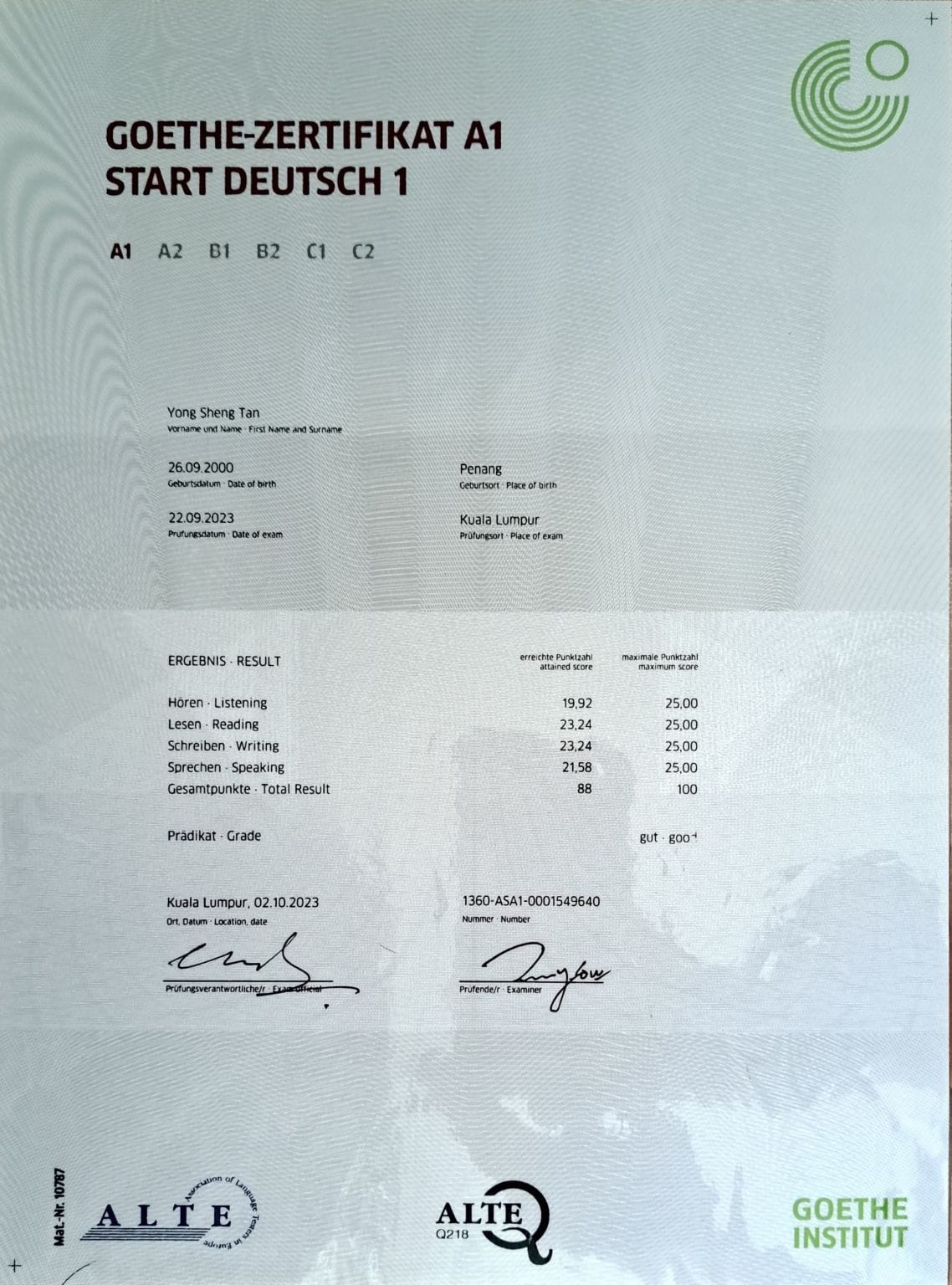
B1 Level Description
At the B1 level, students are expected to handle familiar topics encountered in work, school, leisure, etc. According to the CEFR, a B1 Prüfung ÖSD-level speaker can:
- Understand the main points of clear standard input on familiar matters.
- Deal with the majority of situations most likely to emerge while taking a trip in an area where English is spoken.
- Produce easy connected text on topics that are familiar or of individual interest.
- Explain experiences, occasions, dreams, hopes, and aspirations, ÖSD Prüfung B1 B1 ÖSD (clashofcryptos.trade) as well as briefly discuss reasons and opinions.
Significance of the B1 Certificate
Getting a B1 Certificate can open many doors for people Ösd zertifikat in deutschland anerkannt both personal and expert capacities. Here are some key reasons:
-
Higher Education Opportunities: Many universities require a B1 level of proficiency for admission, especially in English-speaking nations.
-
Employment Prospects: In today’s task market, companies often seek candidates with proven language abilities. A B1 Certificate can boost one’s employability.
-
Personal Development: Mastering a new language can improve confidence and provide opportunities for social interaction in multicultural settings.
-
Travel: For those who take a trip often, having a B1 level of proficiency can substantially boost experiences in English-speaking countries.
Assessment Format
Getting a B1 Certificate normally involves taking an assessment that assesses all four language skills: listening, speaking, reading, and writing. Different organizations and institutions, including Cambridge English Language Assessment, IELTS, and others, use B1-level certification. Below is a normal breakdown of the assessment parts:
| Component | Duration | Skills Assessed |
|---|---|---|
| Listening | 30 minutes | Comprehension of spoken texts |
| Checking out | 60 minutes | Comprehending written texts |
| Writing | 60 minutes | Capability to write simple texts |
| Speaking | 10-15 minutes | Oral expression and conversation skills |
Preparation Tips for the B1 Certificate
Getting ready for the B1 Certificate can be both satisfying and rewarding. Here are a number of customized ideas for striving B1 candidates:
-
Structured Learning: Enroll in a language school or online courses concentrating on B1 level English.
-
Practice Regularly: Dedicate a set quantity of time every day for practicing your 4 language skills– reading, writing, listening, and speaking.
-
Usage Language Apps: Leverage innovation with mobile applications that provide interactive exercises and difficulties to enhance vocabulary and grammar.
-
Engage with Media: Listen to English podcasts, view motion pictures or series with English subtitles, and read English books or articles to immerse yourself in the language.
-
Mock Tests: Take practice exams to familiarize yourself with the exam structure and time restraints.
B1 Certificate: Frequently Asked Questions (FAQ)
Q1: How long does it take to get ready for the B1 Certificate?A1: The duration
can vary significantly depending upon the person’s starting level, study practices, and schedule. Usually, it may take in between 6 months to 1 year of research study from an A2 level.
Q2: Is a B1 Certificate legitimate worldwide?A2: While the B1 Certificate is commonly recognized, its acceptance can vary by institution or organization. It’s suggested to check particular requirements ahead of time. Q3: What resources are best for B1-level study?A3: Resources can consist of specialized textbooks, online courses, language exchange meetups, and
English-speaking tutoring services. Q4: Can I take the B1 exam online?A4: Yes, many organizations provide online evaluations or hybrid alternatives
that permit candidates to take certain
sections online. Q5: What happens if I do not pass the B1 exam?A5: If you do not pass, a lot of organizations provide feedback on your performance.
You can retake the exam after additional preparation. Acquiring a B1 Certificate is an essential step in mastering the English language for both individual and expert development. By comprehending the requirements
, preparing efficiently, and leveraging readily available resources, candidates can confidently strive to achieve this essential turning point. As the world ends up being ever more interconnected, proficiency in English remains a valuable asset that opens doors to many opportunities. Whether for travel, work, or research study, the B1 Certificate can act as a crucial stepping stone towards fluency and greater interaction.

